

Introduction
Back pain is something almost everyone experiences at some point, but how do you know when it is more than just a strain or a long day at a desk? In some cases, ongoing back pain can be a sign of a herniated disc, a condition where the soft cushion between two bones in the spine pushes out of place and presses on nearby nerves. Recognizing the warning signs early can make a big difference, because the sooner you understand what is happening, the sooner you can start the right treatment. If you are searching for herniated disc treatment Dubai clinics for guidance, this blog will walk you through seven signs that your back pain may be linked to a herniated disc, and what you can do about it.
What Is a Herniated Disc?
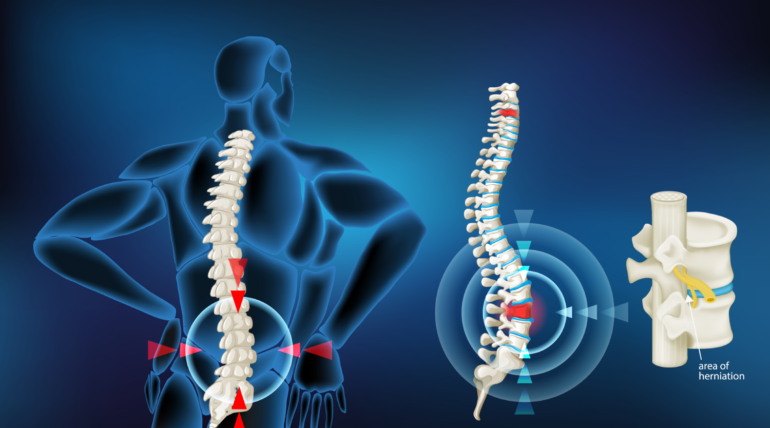
The spine is made up of small bones called vertebrae, with soft, cushion-like discs sitting between each one. These discs act as shock absorbers and allow the spine to bend and move smoothly. A herniated disc, sometimes called a slipped disc, happens when the outer layer of one of these discs weakens or tears, allowing the soft inner material to push outward. When this bulge presses on a nearby nerve, it can cause pain, numbness, or weakness that may be felt in the back itself or further down into the arms or legs, depending on where in the spine it occurs.
7 Warning Signs of a Herniated Disc
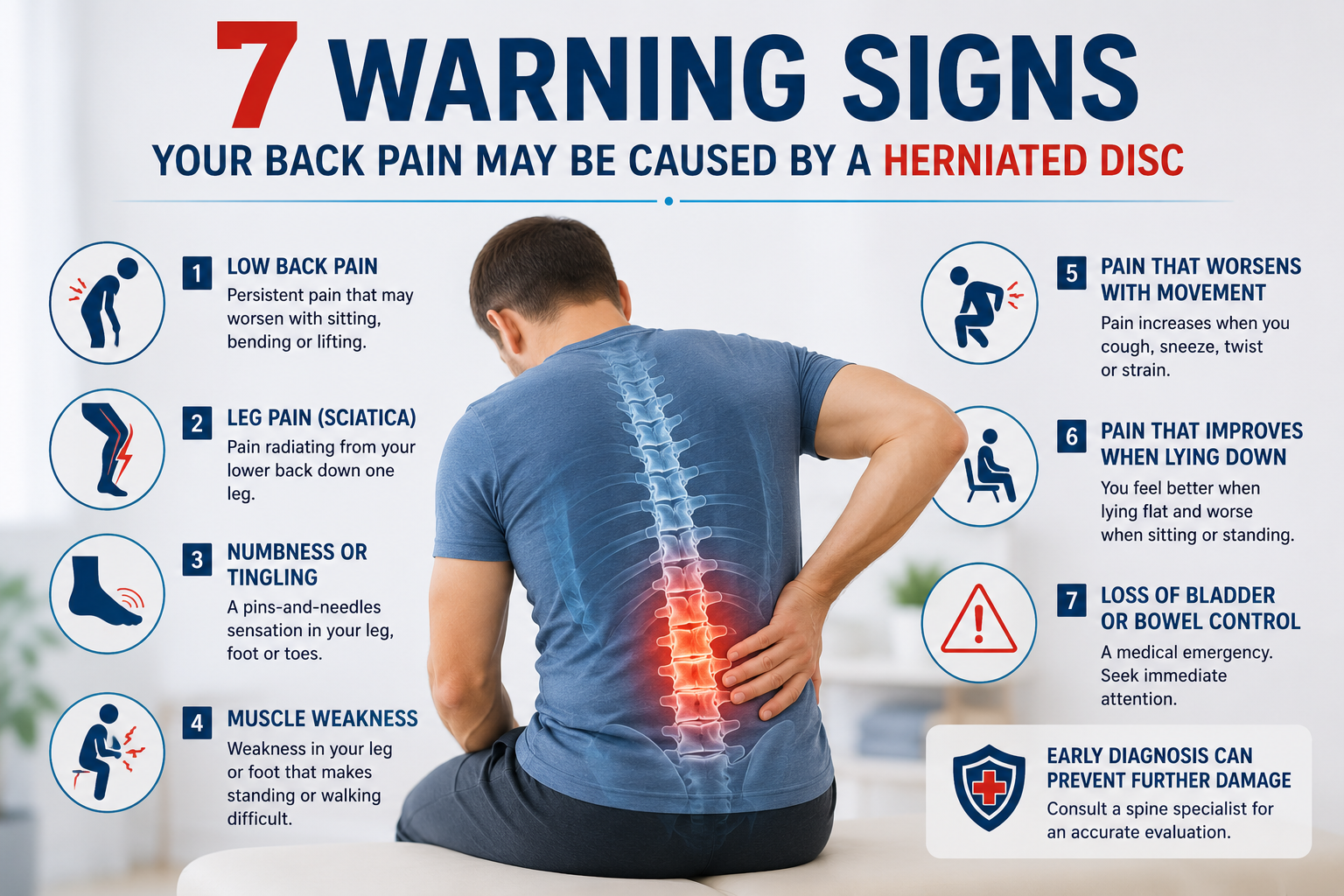
Not every backache means you have a herniated disc, but certain patterns of pain and other symptoms can be a strong clue that something more than simple muscle strain is going on. Here are seven signs worth paying attention to.
1. Pain That Radiates Down Your Leg
One of the most recognizable signs of a herniated disc in the lower back is pain that travels from the lower back, through the buttock, and down the back of one leg. This is often described as sciatica, and it happens when the bulging disc presses on the sciatic nerve.
2. Numbness or Tingling
A pins-and-needles feeling or numbness in the back, leg, foot, arm, or hand can be a sign that a nerve is being compressed by a disc that has shifted out of position. This sensation often follows the path of the affected nerve.
3. Muscle Weakness
If you notice that you are stumbling more often, struggling to lift your foot, or finding it harder to grip objects than usual, this could be a sign that a nerve affected by a herniated disc is also affecting muscle strength in that area.
4. Pain That Gets Worse When Sitting
Many people with a herniated disc find that sitting for long periods, such as during a commute or at a desk, makes their pain noticeably worse, while standing or lying down may bring some relief.
5. Pain That Increases with Certain Movements
Bending forward, twisting, coughing, or sneezing can sometimes cause a sharp increase in pain if a disc is pressing on a nerve. These sudden movements increase pressure inside the spine, which can intensify the discomfort.
6. Pain That Comes and Goes Without a Clear Reason
Unlike a simple muscle strain, which usually improves steadily over a few days, pain caused by a herniated disc may come and go, sometimes feeling better for a while before returning without any obvious new injury.
7. Reduced Range of Motion
If you find it harder to bend, twist, or stand up straight compared to before, and stretching does not seem to help in the way it usually would, this stiffness combined with pain could point towards a disc problem rather than a simple muscle issue.
How Do I Know If I Have a Herniated Disc?
If you are asking yourself, how do I know if I have a herniated disc, the truth is that the signs above can give you a strong indication, but they cannot give you a confirmed diagnosis on their own. A physiotherapist or doctor will usually start with a physical examination, checking your movement, reflexes, and any areas of numbness or weakness. In some cases, imaging such as an MRI scan may be recommended to get a clearer picture of what is happening inside the spine. The combination of your symptoms, a physical assessment, and imaging when needed gives the clearest answer.
What Are the Symptoms of a Slipped Disc?
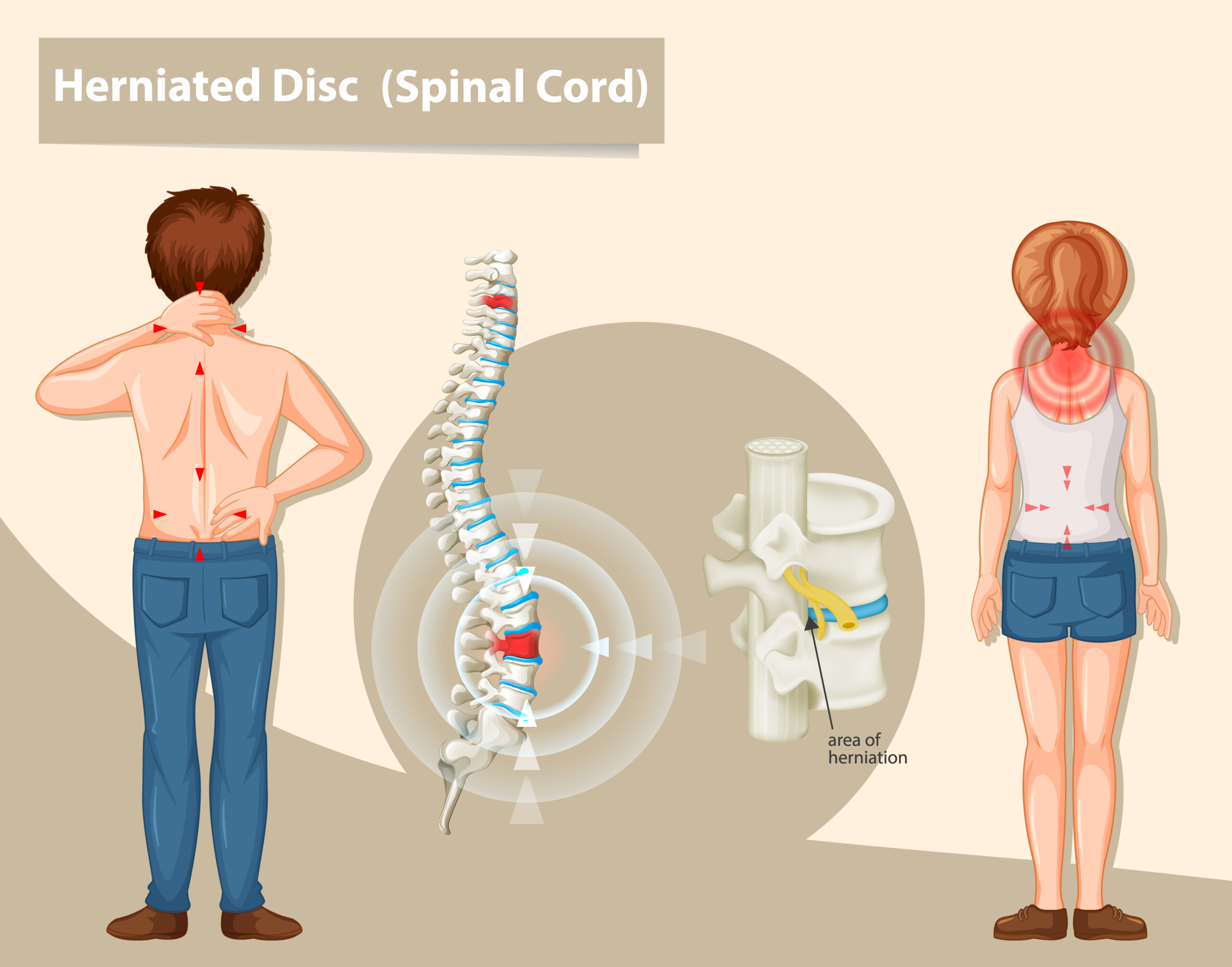
When people ask, what are the symptoms of a slipped disc, they are usually describing the same condition as a herniated disc. Common disc bulge symptoms include localized back or neck pain, pain that spreads into the arms or legs, numbness or tingling, muscle weakness, and pain that changes depending on your position or movement. The exact combination of symptoms depends on which disc is affected and how much it is pressing on nearby nerves, which is why a proper assessment is so important for understanding your specific situation.
How Slipped Disc Physiotherapy Can Help
Slipped disc physiotherapy focuses on reducing pain, improving movement, and strengthening the muscles that support the spine. A physiotherapist may use a combination of manual therapy, targeted exercises, postural correction, and education on how to move and sit in ways that reduce pressure on the affected disc. Over time, these techniques can help reduce inflammation around the nerve, improve flexibility, and build the core and back strength needed to prevent the problem from returning. For many patients, physiotherapy is a key part of recovery, whether used on its own or alongside other treatments such as spinal decompression therapy.
When to Seek Herniated Disc Treatment Dubai Specialists
If you are experiencing several of the warning signs covered in this blog, especially pain that spreads down a limb, numbness, or muscle weakness, it is a good idea to speak with a professional rather than waiting to see if it improves on its own. Early assessment from a herniated disc treatment Dubai team can help identify the cause of your symptoms and guide you towards the right combination of treatments, whether that is physiotherapy, spinal decompression, or other supportive care, before the condition has a chance to become more serious.
Conclusion
Back pain can have many causes, but the seven warning signs covered in this blog are worth taking seriously, especially if they are persistent or getting worse. Understanding disc bulge symptoms and knowing when to seek help can make a real difference to how quickly and how fully you recover. At B Well Forever, our team provides thorough assessments and supportive, hands-on care, including herniated disc treatment Dubai patients can rely on to get back to feeling like themselves again. If any of these signs sound familiar, do not wait to get the support you need.