


Introduction
A spinal cord injury changes life in an instant, and the road back toward independence and function is rarely straightforward. Spinal Cord Injury Rehabilitation is a long, carefully structured process that involves far more than physical exercises alone. It touches nearly every part of daily living, from movement and strength to confidence and mental wellbeing. This blog explains what the journey genuinely involves, so patients and families know what to expect at each stage.
Understanding the Scope of Spinal Cord Injuries
Spinal cord injuries vary enormously in severity and location, which means recovery paths differ significantly from person to person. Some injuries are incomplete, meaning some signals can still travel past the injury site, while others are complete, with no signal passing through at all. The level of the injury along the spine also determines which parts of the body are affected. This variation is exactly why rehabilitation programs must be built individually rather than following a fixed template.
The Early Stage: Stabilization and Assessment
In the earliest phase, medical teams focus on stabilizing the patient and thoroughly assessing the extent of the injury. Once stable, a rehabilitation team, often including physiotherapists, occupational therapists, and sometimes speech therapists, begins working with the patient to understand what movement and function remain. This early assessment shapes the entire rehabilitation plan going forward.
What Does Rehabilitation for Spinal Cord Injury Involve and How Long Does It Take
Rehabilitation typically involves physical therapy to maintain and rebuild muscle strength, occupational therapy to relearn daily tasks like dressing or eating, and sometimes assistive technology training for mobility aids or communication devices. Timelines vary widely. Some patients see meaningful progress within months, while others continue improving gradually over one to two years or longer, depending on the severity and level of the injury.
Physical Therapy and Rebuilding Movement
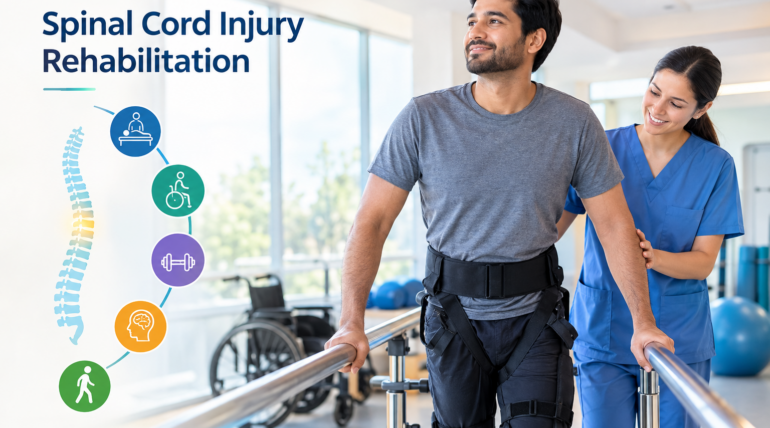
Physical therapy sessions focus on strengthening muscles that still function, maintaining flexibility in joints, and, where possible, retraining the nervous system to recover as much movement as it can. Therapists often use specialized equipment such as parallel bars, standing frames, and body-weight support systems to safely practice movements that would otherwise be too difficult or risky.
- Strength training for functioning muscle groups
- Flexibility and range-of-motion exercises to prevent stiffness
- Balance and coordination training where mobility allows
- Use of assistive devices such as wheelchairs, braces, or walkers
- Bladder and bowel management training as part of overall care
Occupational Therapy and Everyday Independence
Occupational therapy focuses on practical, everyday skills like getting dressed, cooking, or using a computer. Therapists often introduce adaptive tools and techniques that allow patients to complete these tasks safely and with as much independence as possible. This part of rehabilitation is just as important as physical strength building, since it directly affects quality of life and confidence.
What Does Spinal Cord Injury Rehabilitation Look Like
Day to day, it looks like a structured routine of therapy sessions, gradual goal-setting, and steady adjustments as the patient’s abilities change. It is rarely a straight line. Progress often comes in stages, with plateaus followed by breakthroughs, which is why patience and consistent support from both the care team and family make such a difference in long-term outcomes.
The Emotional Side of Recovery
Physical recovery is only part of the picture. Adjusting to life after a spinal cord injury often brings emotional challenges, including frustration, grief, or anxiety about the future. Many rehabilitation programs include counseling or peer support as part of the overall plan, recognizing that mental and emotional wellbeing directly affects physical progress and motivation to continue with therapy.
The Role of Family and Caregivers
Family members often play a bigger role in spinal cord injury rehabilitation than they initially expect. Learning how to safely help with transfers, mobility aids, or daily routines becomes part of the recovery process for the whole household, not just the patient. Many rehabilitation centers include caregiver training sessions specifically so that family members feel confident and capable once the patient continues part of their recovery at home.
Long-Term Goals Beyond the Clinic
Rehabilitation does not stop the day a patient leaves a formal program. Many people continue working on strength, mobility, and independence for years afterward, often with periodic check-ins or maintenance therapy sessions. Setting long-term goals, whether that means returning to work, driving again, or simply managing daily tasks with more independence, helps keep motivation strong well beyond the initial intensive treatment phase.
Conclusion
Spinal Cord Injury Rehabilitation is a demanding but deeply rewarding process that rebuilds function step by step, supported by a team that adapts as the patient’s needs change. At a dedicated Spine Pain Treatment Center Dubai families trust, patients receive coordinated physical, occupational, and emotional support throughout their recovery journey. B Well Forever’s specialists work closely with patients and families to build a realistic, supportive path forward after spinal cord injury.